
The Reserve Bank of India on Thursday kept the benchmark interest rate unchanged at 4 per cent and decided to continue with its accommodative stance against the backdrop of an elevated level of inflation.

The Indian rupee rebounded 50 paise from its all-time closing low to settle at 96.36 against the US dollar, driven by retreating crude oil prices, signs of easing geopolitical friction, and likely central bank intervention.
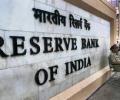
Rajan's colleague in the ministry, Economic Affairs Secretary Arvind Mayaram, also expressed hope on Thursday that the central bank would vote for growth.

Striking a different note from its peers, US brokerage Bank of America Securities has maintained that the Reserve Bank will leave rates unchanged next week, recognising growth-focused and capex-driven fiscal expansion, which though poses huge price pressure and interest rate risks later. The RBI's rate setting panel Monetary Policy Committee (MPC) will begin its deliberations next Monday and announce the policy moves on Wednesday (February 9) in the backdrop of a massive spike in bond yields post the Budget. Almost all major central banks are in the process of hiking rates to tame inflation.

Policy rates are not likely to increase in 2008 but a cut in repo rate too is uncertain.

Reserve Bank Governor Sanjay Malhotra on Friday said the central bank does not target any band for the rupee in the forex market, and allows the domestic currency to find its own correct level.


Disappointed with the RBI decision of not reducing policy rates, carmakers and real estate players today said the sectors, which are already reeling under a slump, will continue to suffer due to the high interest rate regime.

While the economy will wait for a rate cut in December, the banking industry should be happy with the wave of liberalisation -- a big push for growth in bank credit, points out Tamal Bandyopadhyay.

Foreign Portfolio Investors (FPIs) have withdrawn over Rs 62,853 crore from Indian equities in the first fortnight of June, bringing the total outflows for 2026 to Rs 2.87 lakh crore, surpassing the entire 2025 figure, driven by geopolitical tensions, global economic growth concerns, and a weakening rupee.

The markets will remain choppy ahead of RBI policy.

'The US reciprocal tariff has added another element of uncertainty and the central bank may prefer to wait and get further clarity.'
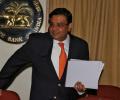
Fitch said the full implications of Patel's resignation will only become clearer once there is some indication of the RBI's policy approach under his replacement, Shaktikanta Das

Mixed views were expressed by top economists on the Reserve Bank of India's (RBI) Monetary Policy Committee's (MPC) decision to hold the repo rate at 5.5% and maintain a neutral stance. While some say the decision was as expected and one more rate reduction is expected this fiscal, there is also a view that rate cut by MPC was warranted given the evolving global situation.
Banks are depending more heavily on the market for certificates of deposit (CDs), whose worth climbed to a record Rs 5.75 trillion in the fortnight to January 15, owing to deposit tightness in the system.

Retail inflation crossed the RBI's comfort level and rose to 5.21 per cent in December on increase in prices of food items.

Inflation in India is indeed a complex subject. Interest rate hike (or cuts) alone are not the solution to tackle inflation, writes M R Venkatesh.

Chief Economic Advisor V Anantha Nageswaran stated that India's economy is projected to return to a 7 per cent-plus growth trajectory by 2027-28 (FY28), or sooner if external conditions improve, despite near-term challenges from the West Asia crisis.

* Repo rate reduced by 25bps to 5.25 pc; * 4th rate cut, totalling 125 bps, since February 2025; * MPC also decided to continue with neutral stance; * GDP growth forecast for FY26 raised to 7.3 pc from 6.8 pc;

Sanjay Malhotra has made structural changes to banking regulation to bring down costs and increase efficiency. Plus, he kicked off a benign interest regime. But there are challenges ahead.

Investors were focussed on the RBI's monetary policy review on Tuesday which will give an insight into its inflation and rates outlook.

'The RBI's MPC will maintain the current policy rates (6.50%) at the policy meeting, given ongoing inflationary pressures.'
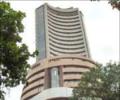
While the IT stocks traded firm since the start of the day, the BSE IT index soared to a 10-year high.

The Reserve Bank of India's (RBI) Monetary Policy Committee's (MPC) decision to cut the repo rate by 50 basis points (bps) to 5.5% was contrary to the expectations of many economists. Firstly, most of the economists expected the MPC to cut the repo rate by 25 bps citing the weakening of inflation, prospects of economic growth, geopolitical uncertainty and comfortable system liquidity.

Leading economists said on Tuesday the Reserve Bank of India decision to keep the key policy rates unchanged was on expected lines and expressed hope that with inflation now treading down it would change its policy stance by next month.

For the time being, the RBI is done with the cuts. A cut in October, which many are still predicting, is not certain. Of course, if growth nosedives, the script will be different, expects Tamal Bandyopadhyay.

Equity benchmarks extended their decline for the fourth straight session on Wednesday, with the Sensex falling 214.85 points after the Reserve Bank raised the key interest rate by 50 basis points. Continuous foreign fund outflows and surging crude oil prices also weighed on markets. The 30-share BSE benchmark dropped 214.85 points or 0.39 per cent to settle at 54,892.49.

India's gross savings rate is projected to be nearly 47 basis points higher in FY25 than previously estimated, following the Securities and Exchange Board of India's (Sebi) revision of the methodology for calculating household savings routed through the securities market.

Market breadth depicted gains with 1,476 advances over 1,403 declines on the BSE. 140 stocks remained unchanged.

'The government's decision to keep interest rates unchanged on small savings schemes will certainly constrain banks' ability to cut deposit rates further.'

The Reserve Bank of India on Thursday decided to keep the policy rate unchanged for the ninth time in a row, saying food inflation remains stubborn. The rate increase cycle was paused in April last year after six consecutive rate hikes, aggregating to 250 basis points since May 2022.

'We never waste a crisis. There will be learning and the supervisory tools will get better with each episode.'
The cumulative rate hikes of 2.5 percentage points by the central bank since May 2022 negatively impacted headline inflation by 1.60 per cent, a paper by senior RBI staffers said on Monday. "Policy rate increases have anchored inflation expectations and modulated aggregate demand, generating disinflationary responses," the paper by Deputy Governor Michael Patra, Indranil Bhattacharyya, Joice John and Avnish Kumar, said.

Host of lenders led by State Bank of India (SBI) and Bank of India hiked lending rates after the Reserve Bank raised the benchmark interest rate to tame inflation. The hike has been effected in their benchmark rate linked to the repo rate, which increased by half a percentage point to 5.9 per cent. Even financial institutions like mortgage lender HDFC Ltd hiked the lending rate by 50 basis points effective Saturday.

Insights from behavioural economics suggest that an ambitious nudge can be effective if three conditions are met, points out Ram Singh Insights from behavioural economics suggest that an ambitious nudge can be effective if three conditions are met, points out Ram Singh, director, Delhi School of Economics.

Stock markets closed higher on Friday after the Reserve Bank of India kept its benchmark interest rate unchanged as expected and proposed allowing banks to lend to Real Estate Investment Trusts (REITs) with certain prudential safeguards to deepen the financing pool for the real estate sector.
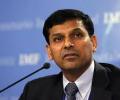
Rajan warned against waiting to act until inflation expectations become entrenched, but also said the Reserve Bank of India would overlook temporary spikes in inflation.

A majority of economists predicted RBI Governor Raghuram Rajan would leave policy rates unchanged on Tuesday and expected a dovish commentary, as crude oil prices and inflation cool off.
The Reserve Bank of India (RBI) on Friday cut the repo rate by 25 basis points to 6.25 percent, marking the first reduction in five years. The central bank also projected GDP growth for fiscal year 2026 at 6.7 percent and inflation to come down to 4.2 percent in FY26 from 4.8 percent in FY25. The RBI said the global economic backdrop remains challenging but the Indian economy continues to remain strong and resilient.

Fitch Ratings on Friday said persistently higher oil prices could cause India's retail inflation to rise faster than the expected gradual pace, and lead to a slowdown in economic growth in the first half of financial year 2026-27 (FY27).
